FCU:
FCU is the abbreviation used for FAN COIL UNIT that are available for either DX or chilled water system that houses refrigerant or chilled water coil respectively. Beside the type of coil used, the other components are common such as the blower fan & filters. FCUs are usually available from 0.75 to 5 TR from various brands across the globe.
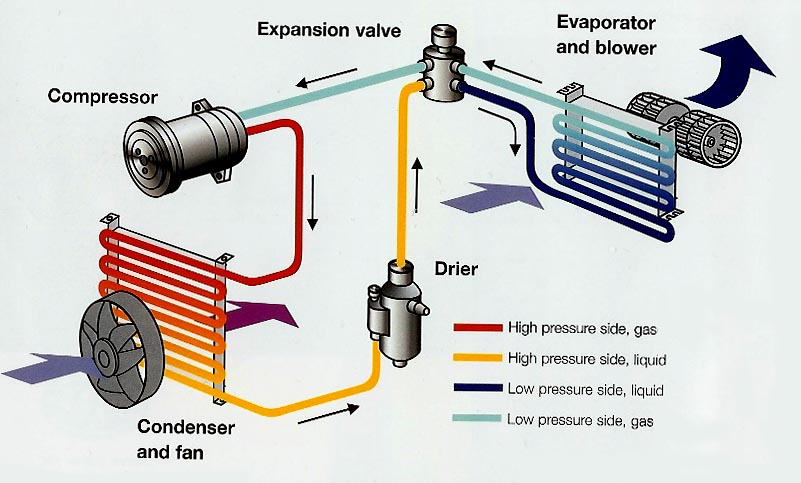
Fan Coil Unit, as the name suggests the unit houses the Blower(Fan), the evaporator Coil (for DX System) / Heat Exchanger Coil( for sytems other than DX), Filter and sometimes Heater Coil(Electric). Usually takes the hot air from room and cool it then suply to room.
FCU is fan coil unit which is intalled for samll capacities and have less options than AHU like no humidity control and no special options for heat recovery of air filters.
Fan Coil Unit, as the name suggests the unit houses the Blower(Fan), the evaporator Coil (for DX System) / Heat Exchanger Coil( for sytems other than DX), Filter and sometimes Heater Coil(Electric). Usually employed for upto 4 to 5tons , some manufacturers do make higher capacities but will be belt driven which could be noisy.
AHU:
AHU is generally a bigger system than FCU. AHU is more complex than the FCU and that AHU are often used in bigger establishments or spaces. The AHU system usually channels air through ducts whereas the FCU may have or don't have any ductworks. AHU system treats outside air while FCUs basically recycle or re-circulates the air. AHU have sections for reheating and humidifying whereas the FCU may have heaters but no Humdification. FCU are often observed to be noisier than the AHU.
AHU is the abbreviation used for AIR HANDLING UNIT; is an advance type of FCU beyond 5 TR capacity. They are either available in standard sizes or custom size & body construction. In addition to the standard components (blower fan & filter), it has advance filters, UV light, mixing chambers, etc. depending upon the requirement & construction.
AHU is the abbreviation used for AIR HANDLING UNIT; is an advance type of FCU and
normally made as to customer demand-such as heater,uv lamps,carbon filter, hepa filter, pre filter and bag filters are normally using in all AHU'S with return air duct + some fresh air also and suply the cool purified air to the premises by using blower and motor running with or without VFD.
AHU means Air Handling Units and are available in number of varities and tonnages from small upto large capacities. Thay are available with number of modifications which are normlly not available in FCUs as mentioned above.
Air Handling Unit, think of AHU as a bigger FCU. AHU typically houses Blower, Heating or Cooling Coil(or both) and Filters. AHU's can be given provision for adding Fresh Air(Outside Air) , Humidifier and UV lights (Seen a demonstation conducted by carrier and their studies shows no or very very less amount of mould forming at the coils and ofcourse bacteria and viruses) for killing organic substances. AHU's are be available for larger tonnages too.
FCU is an indoor unit with small tonage capacities used with central air conditioning systems such as chillers system.
AHU is an indoor and also can be used as outdoor also used with central air conditioning systems such as chillers system but have a wide range of capacities having a great static pressure of fans to deliver the air through air ducts to big cooling zone areas.
FAHU:
FAHU is the abbreviation used for FRESH AIR HANDLING UNIT. These are usually centralized units employed to induce fresh air quantities to the confines spaces. They come into picture wherever there are limitations to fresh air intake either directly or through AHUs. FAHUs are either of normal construction having 100% fresh air through a blower fan or Treated FAHU that employs an additional cooling coil to induce treated air into the confined space without deteriorating the indoor conditions. It all depends upon the selection of the designer to provide an optimum HVAC solution.

Fresh Air Handling Unit, same as a AHU but dosent have air recirculation option(100% Fresh Air is used). The Return air is extracted to the atmosphere either used Heat Wheel or coils like heat exchanger coil,pre cooling coil and cooling coil with pre filter, bag filter,UV lamp,HEPA filter,Carbon filter { where it is applicable }and for some units using Electronic filter also.Then suply the purified cool air to the rooms with belt driven motor or direct drive controlled by VFD.
When the AHU is used for fresh air only then it is known as FAHU (Fresh Air Handling Unit). means there is no return duct only fresh air supply to the area.
Fresh Air Handling Unit, same as a AHU but dosent have air recirculation option(100% Fresh Air is used). The Return air is extracted to the atmosphere, usually used in places like hospitals where contaminated return air is not advised to be reused. The extract air is most likely to be of at a lower temperature that the fresh air taken by the FAHU, so inorder to increase the efficiency of the system a heat exchanger(usually Heat wheel or Cross flow Plate type HX) is used where the temperature of fresh air is transfered to the extract air.
FAHU is same like AHU with fresh air100%.




 Posts

